Changing the world one garden at a time.
This is an experiment: is it possible to make a forest garden in a small urban setting?
A forest garden is, according to Copilot (my new friend):
A sustainable, low-maintenance food-growing system that mimics a natural woodland. It layers edible plants—trees, shrubs, herbs, and ground cover—to create a self-supporting ecosystem. Designed for biodiversity and resilience, it provides fruits, nuts, vegetables, and habitat while enriching soil and conserving water. Nature meets nourishment.
He likes to end with a flourish.
The Beginning
We moved here in 2021. The garden was chaotic, uncared for for a number of years. There was decking (which I hate), mounds of earth, an apple tree, a sycamore tree, and an elder tree all in one place. I set to work.
One of my principles is to reuse everything. The decking, which of course I removed, has made edges to paths both here and at the allotment, compost bins, greenhouse benches—and I still have some left. The lights from the decking now hang in the laburnum tree.
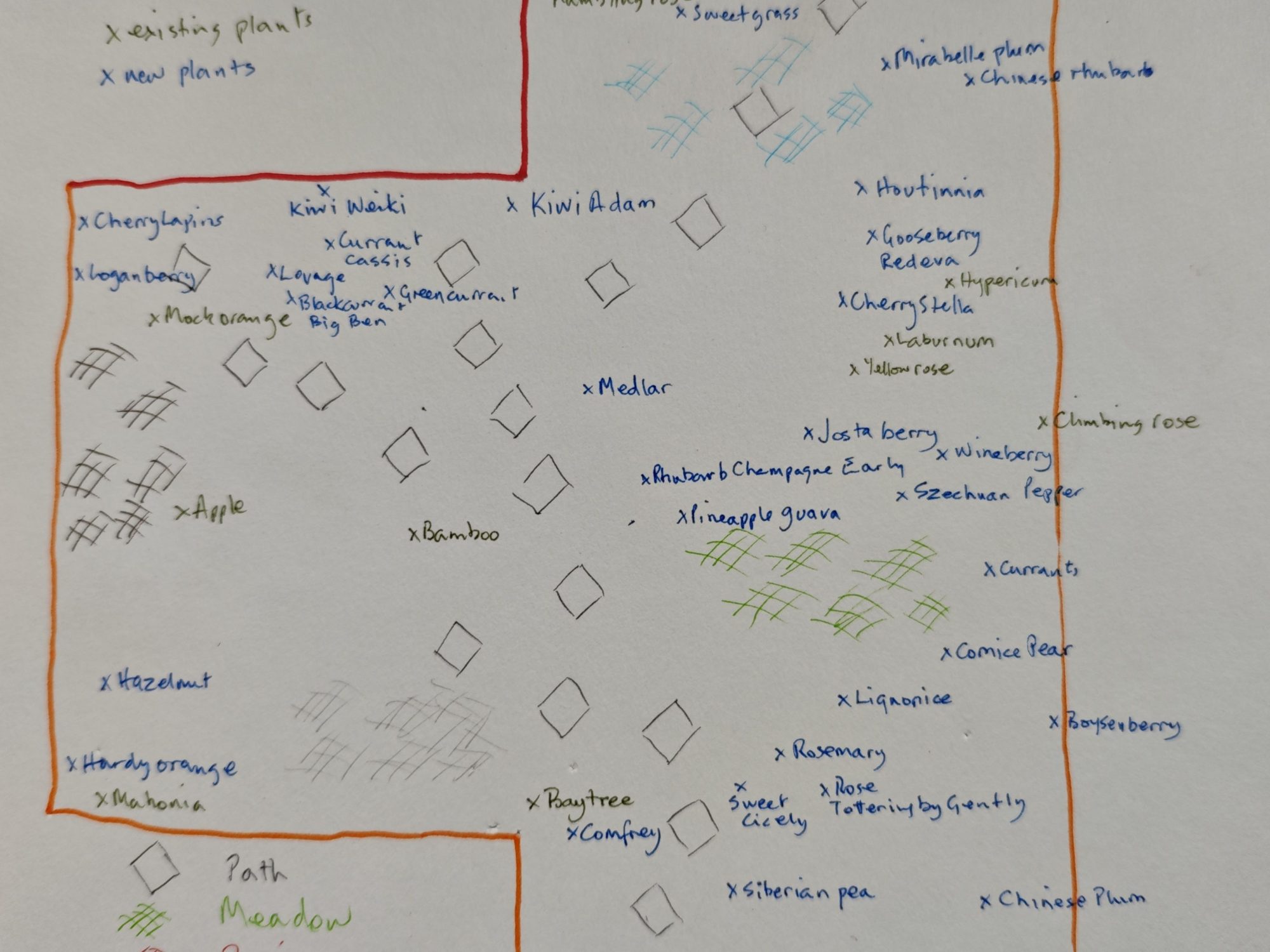
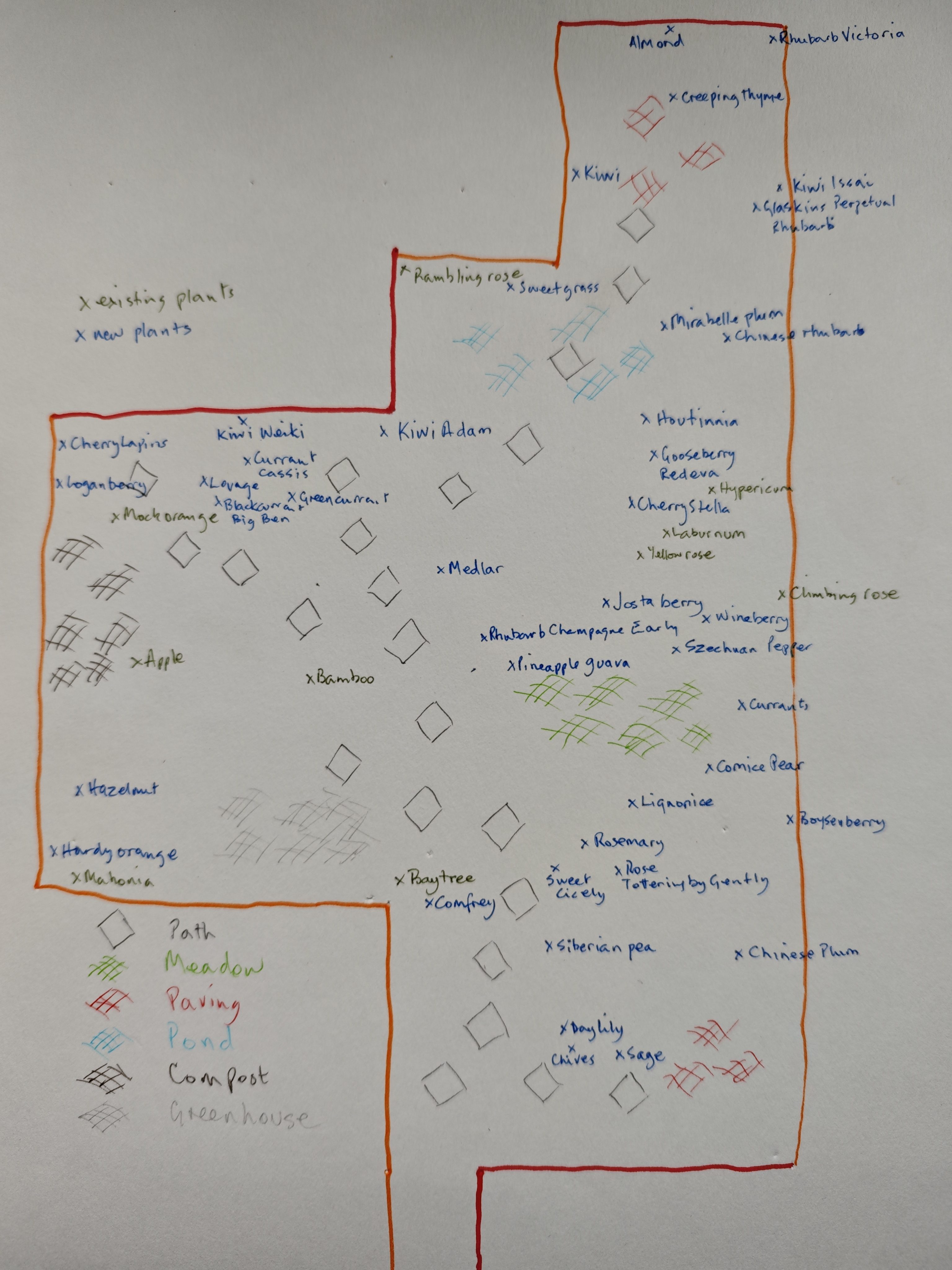
There was also paving by the house with lights that once flashed in different colours. I lifted out the lights (which no longer worked) and stored them away—not sure what for! The paving stones were arranged in diamonds—square stones set with a corner pointing toward the house. I kept this orientation and used it as a template for all the paving and paths throughout the garden.
What Remained
Plants that were here? Mostly bindweed. But there had once been a well-constructed garden. I kept:
- A yellow rose
- Two climbing roses
- The apple tree (which this year produced masses of apples)
- A bay tree, now trimmed into the shape of a bay leaf
- A few resilient shrubs, survivors of many relocations
The Gnomes
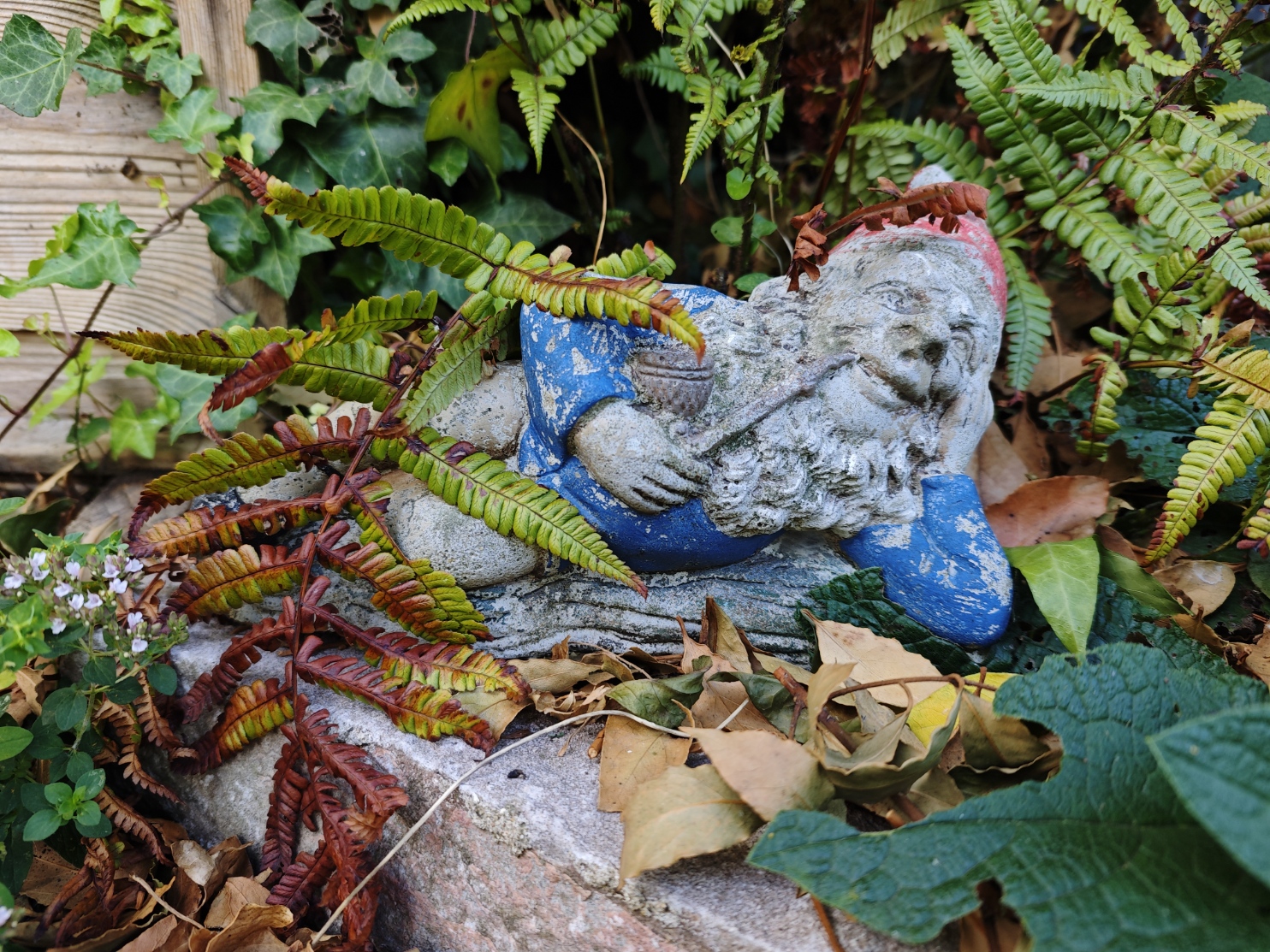
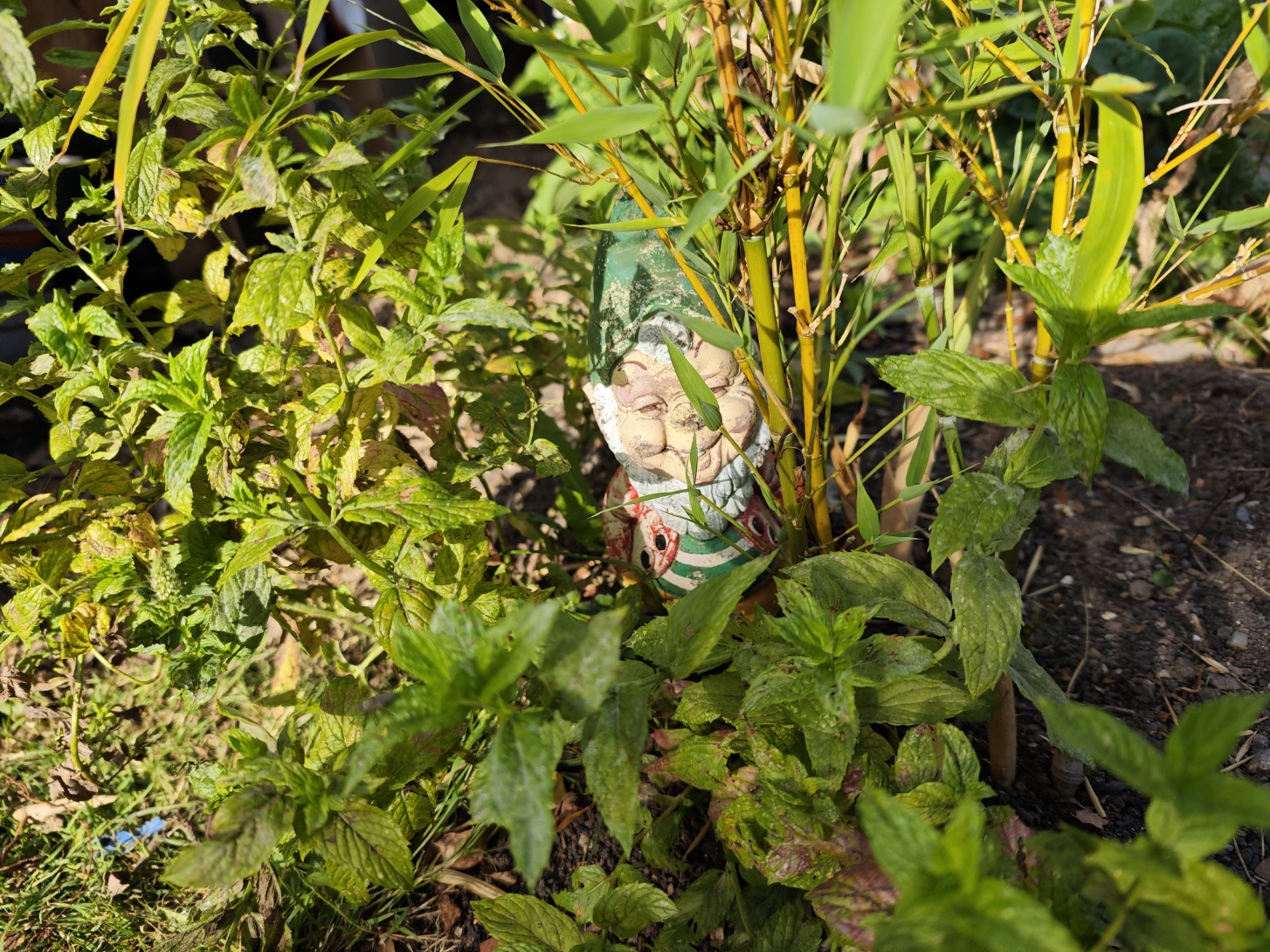
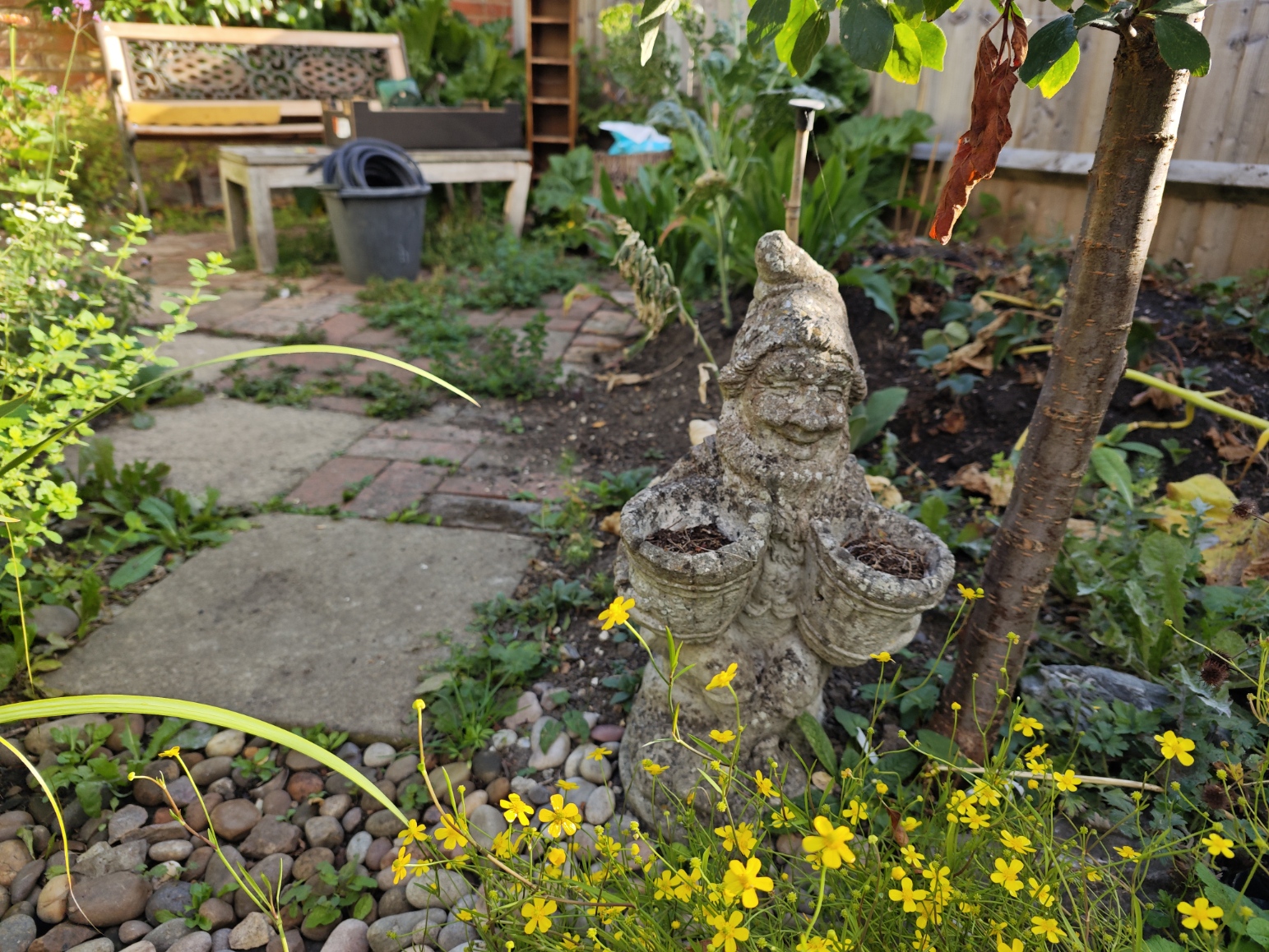
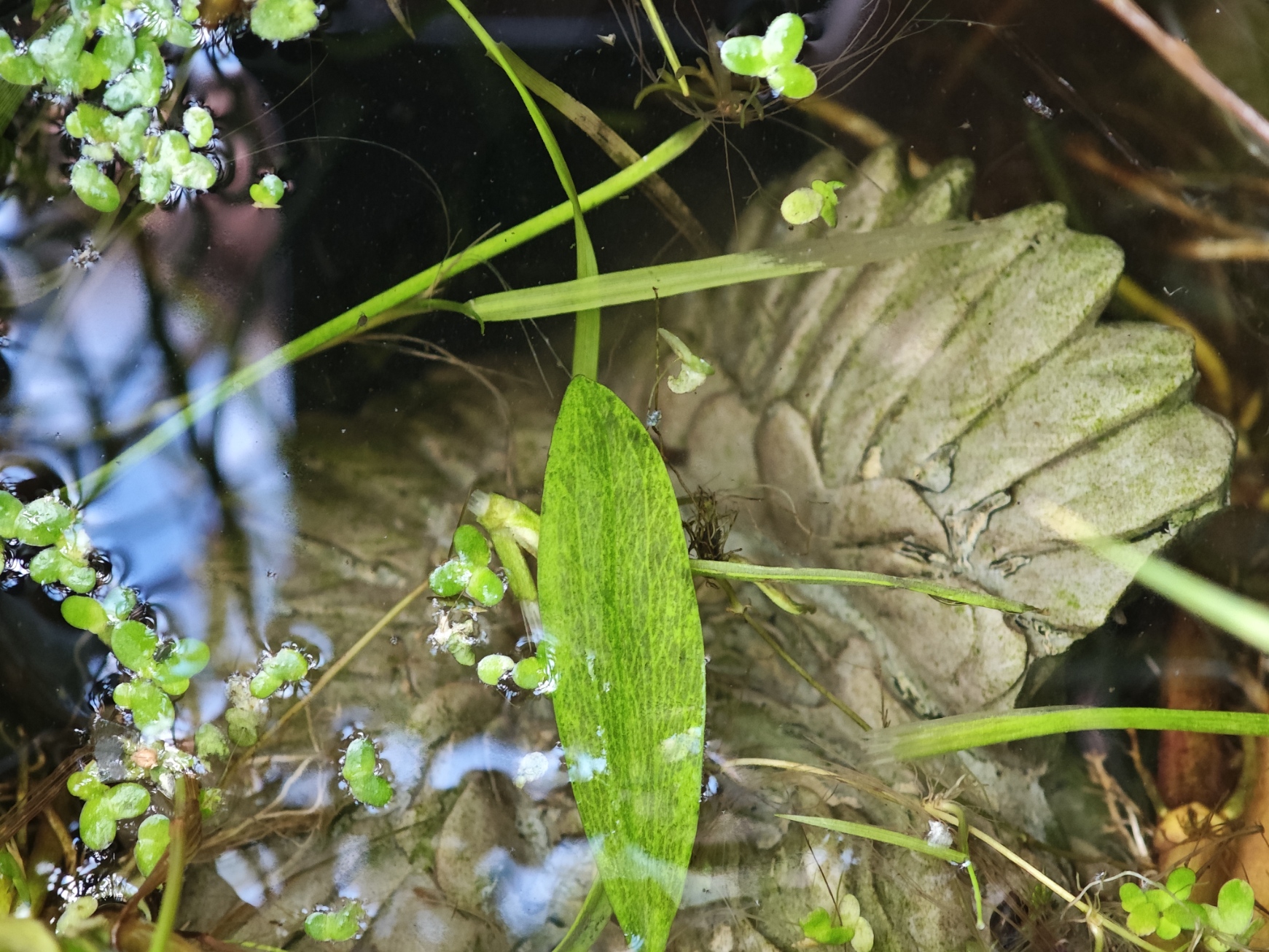
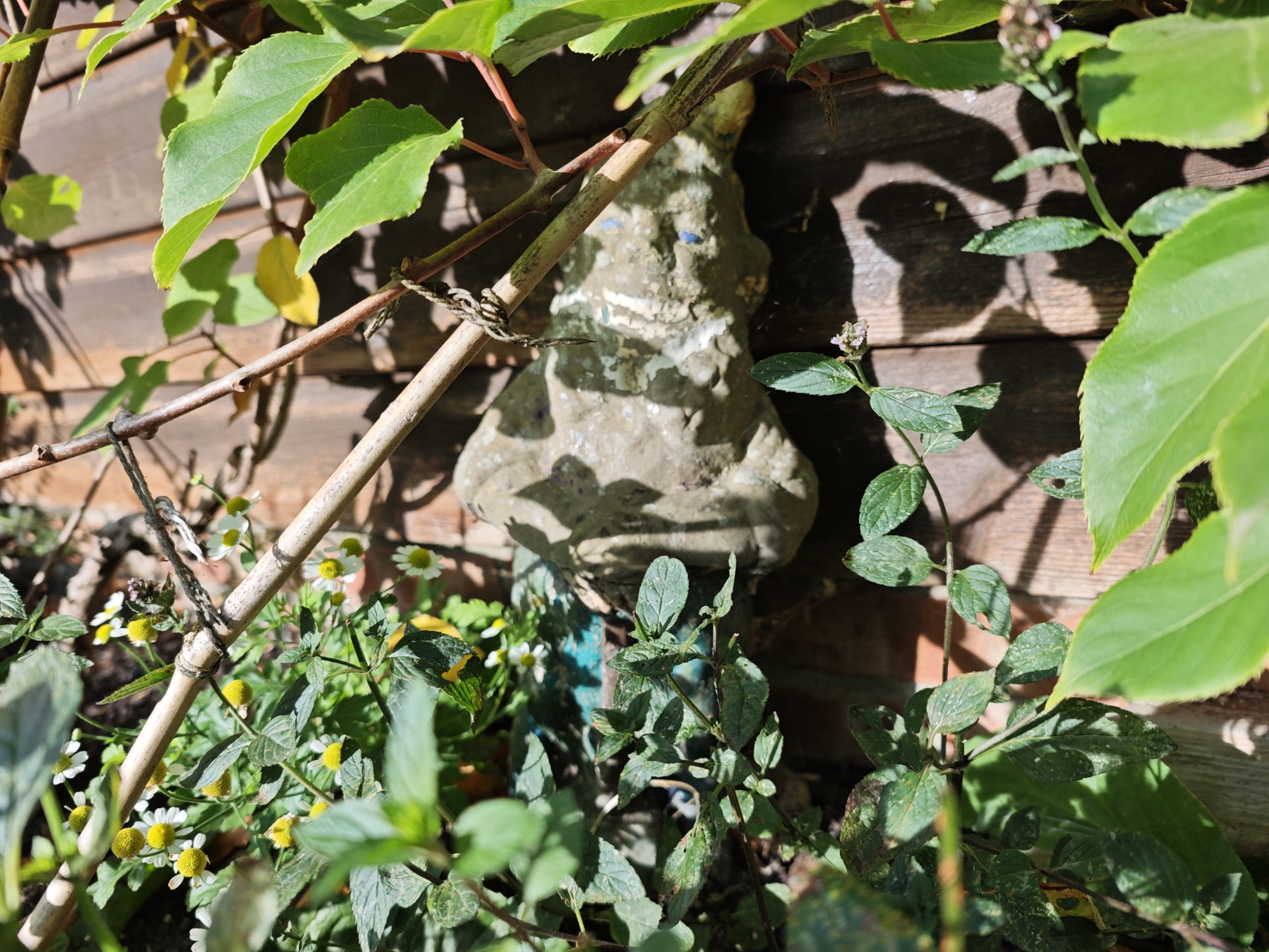
I should mention the gnomes. They came with me—except for Shirley Blackfoot, who arrived last Christmas. They help in the garden, keeping an eye on things when I’m not around. Younger visitors might enjoy spotting them. I’ve included some pictures to help.



Growth & Layers
One thing I want to emphasise is how quickly things happen. As you can see, the garden is flourishing. I planted the tree and shrub layers in 2022. In three years, the structure of the garden is taking shape. The herbaceous layer is filling out, and I’m still planting annual vegetables like courgettes and beans to fill the gaps.
I also have a greenhouse where I grow tomatoes and sometimes peppers. It’s used for propagation too.
Reuse & Community
Beyond reusing materials, I’ve benefited from a very active community sharing practice—where unwanted items are given away. Thanks to this, I’ve collected:
- Topsoil
- A wheelbarrow
- Bricks for paving
- Water butts
- A small electric mower for my very tiny lawn
- Plants (and more)
The Pond
There’s a pond with stepping stones. The rocks around the edge were all here, as was a pump that once ran a rather twee water feature. When we were clearing Louise’s father’s house, we found a paving stone with a hole in the middle. It’s now one of the stepping stones, with the pump underneath—water bubbles up through it. The idea started with the stone.
The Front Garden
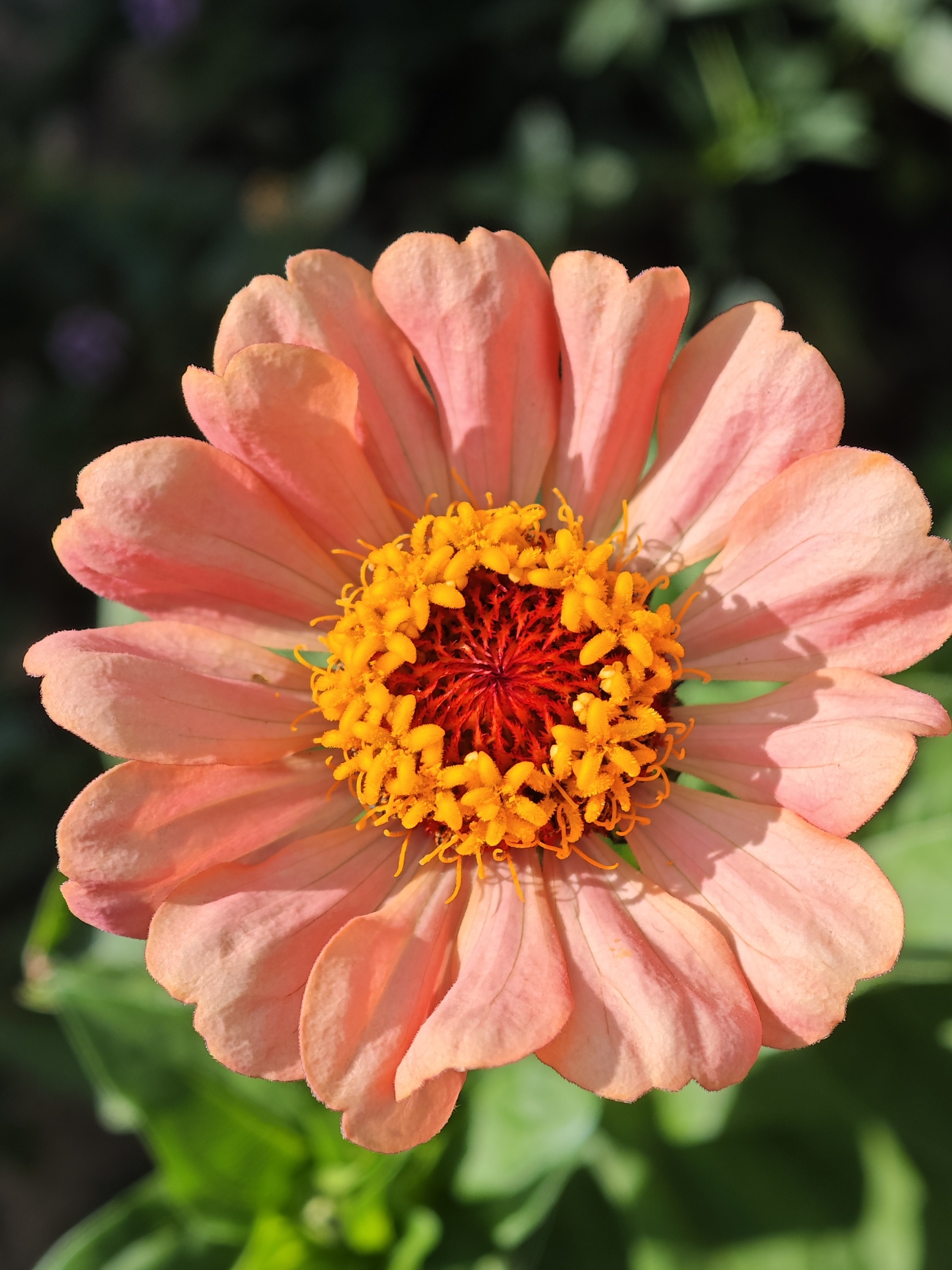
The front garden isn’t on the plan. It’s mostly new. The cordyline was already there, and I’ve added:a fig tree a pomegranate, lavender, roses, and my beloved zinnias – nether edible nor medicinal, but with a surpassing beauty that turns my head every day they are in flower.
 a small forest garden