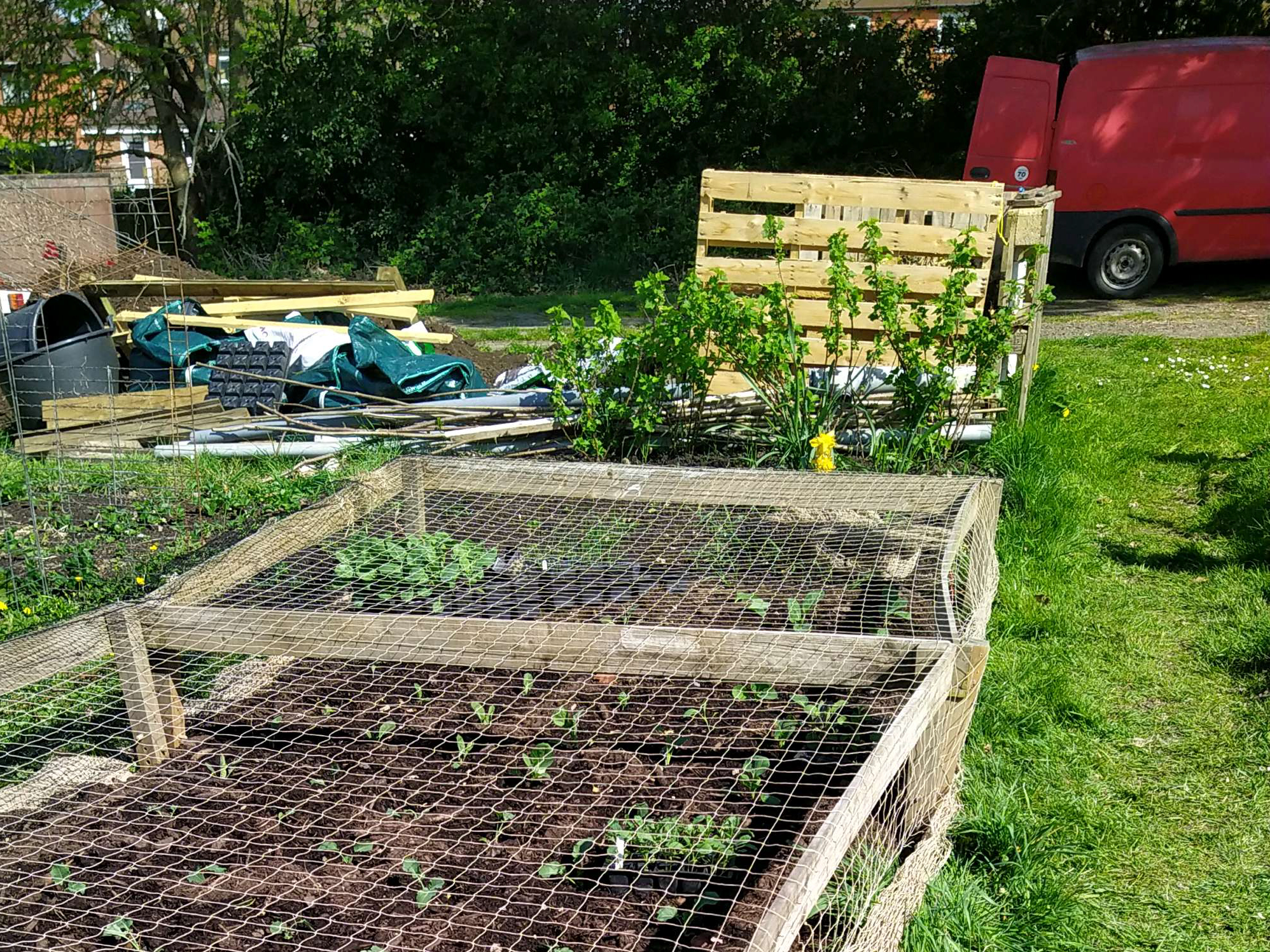
I’ve been working hard in the allotment all week. If you’ve read any of the other posts here you’ll know I am using a no dig method, but not the traditional (!) no dig method. If you are a new gardener, or even an old gardener, you may be surprised to know there are traditional no dig gardeners, but there are. I won’t talk about them because I’m not one of them. I’m a new wave no dig gardener.
The thing about my methods is that there are no enemies in the garden. There is no such thing as a weed or a pest or a disease.
The traditional gardener, no dig or traditional traditional, starts by getting rid of the weeds. On my plot I don’t get rid of anything. If a piece of couch grass or bindweed root comes into my hand, I chuck on the compost heap, or just leave it where it is. There are no weeds. There are only plants. My idea is to reduce the competition a bit by mulching with cardboard and rotted organic matter. I then plant through this layer. The other plants are still there, but the plants I want to thrive have a head start.
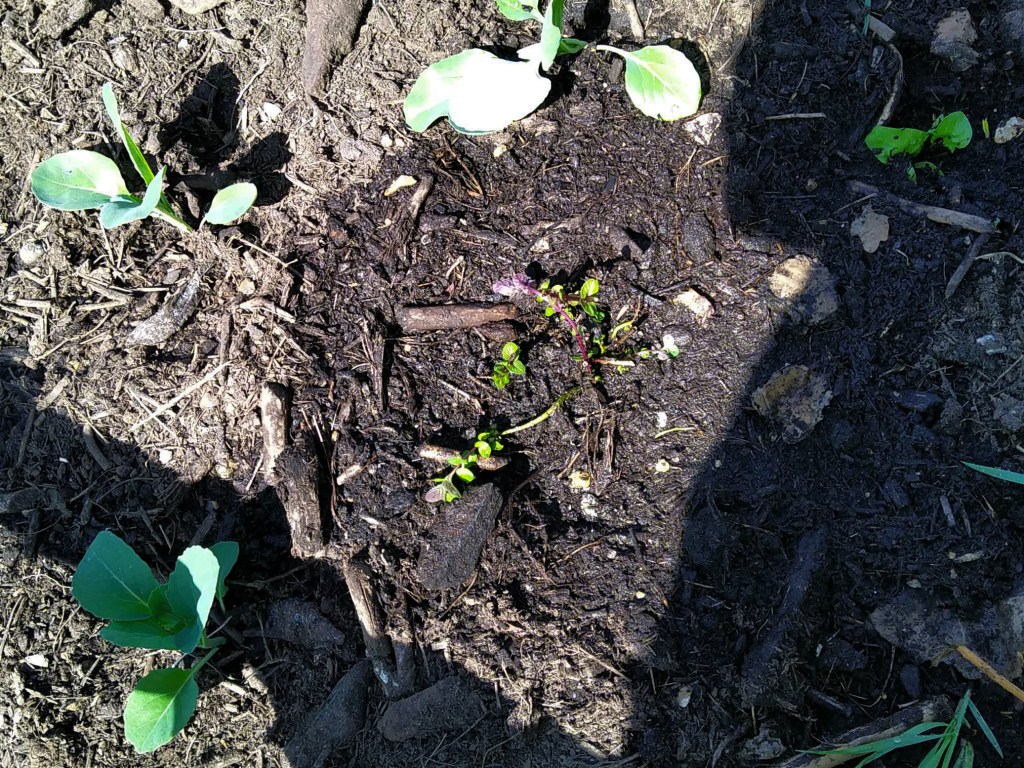
When it comes to pests, it is a matter of creating a balance. If a little cabbage bug is flying along and sees a field of cabbages he thinks ‘Yum! I could live here!’ and he tells all his little cabbage bug friends and they settle in. When he flies past my cabbages he may like the look of a cabbage, but as he gets closer he thinks, ‘Ew! What’s that horrible stink!’ because there is peppermint and liquorice mint planted next to the cabbages. He flies on, looking for a better restaurant.
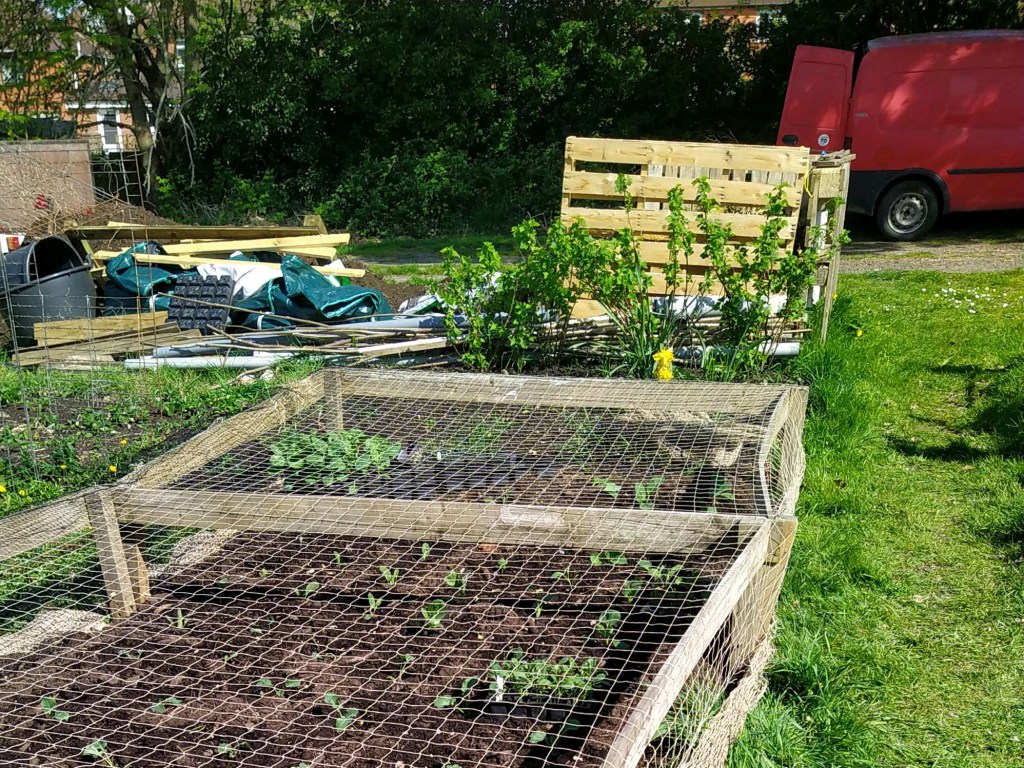
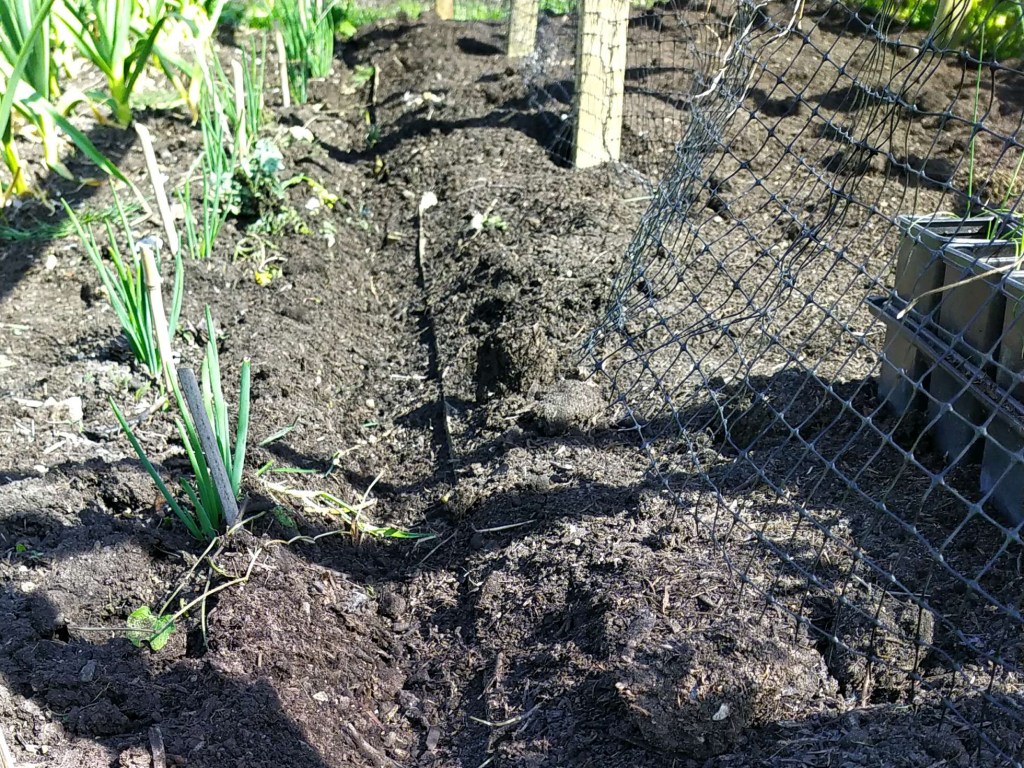
So, companion planting. But it is complicated. What likes what, and what doesn’t like what, and what one source says are good companions and another says not so good. If you’ve read any of my other blogs you probably know that my approach is an experiment. I’m trying things out. And I’m pragmatic, and a little random. I planted peas this week. I wanted to put them where the overwintered kales were just finished with. I planted them and then looked up what goes well with them and found that they don’t like shallots or garlic. They were next to shallots and garlic. I already knew that all the onion family like carrots and I discovered that peas do too so I’ve sown a row of carrots on either side of the shallots to make a division. There was not quite enough room, but the shallots will be harvested long before the carrots, so it should work.
With the cabbages it was a bit more complicated. I’d planted them next to the strawberries, but they don’t like each other. I then discovered that they both like spinach, so I put some in between as a barrier. This was when I learned about cabbage pests not liking aromatic plants, hence the peppermint and liquorice mint. I also discovered that tomatoes deter a cabbage worm, so I mixed in a few spare tomato plants. I should add that all these plants are things I had already grown, because I like them or want them, or just because they are easy, like peppermint.
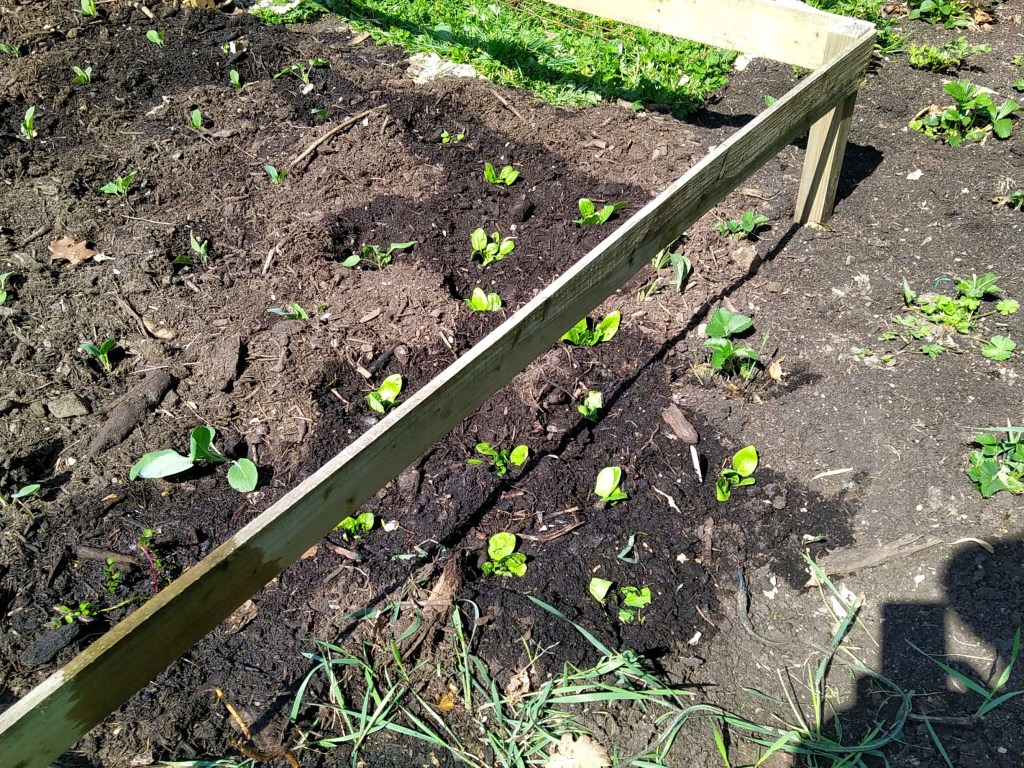
It’s not all plain sailing, though. The next day I discovered that although tomatoes deter the cabbage worm, they don’t actually like cabbages, but as I grow my main crop of tomatoes in the greenhouse I decided they should take one for the cause.
It is all about creating a balance. Everything is accepted in relationship to everything else, everything has it’s place. I have talked a bit about plants that are designated as weeds, and I’ve talked about pests and balance. If the bugs get one or two of my cabbages, so be it. We can live together and thrive together. I haven’t mentioned diseases. I’m trusting that the same methods will apply. Again I repeat, it is all about balance.
And everyone now knows what happens when things get out of balance.
 a small forest garden
Love your ‘balanced’ approach and your respect for nature in all its forms! A place for everything 🙂