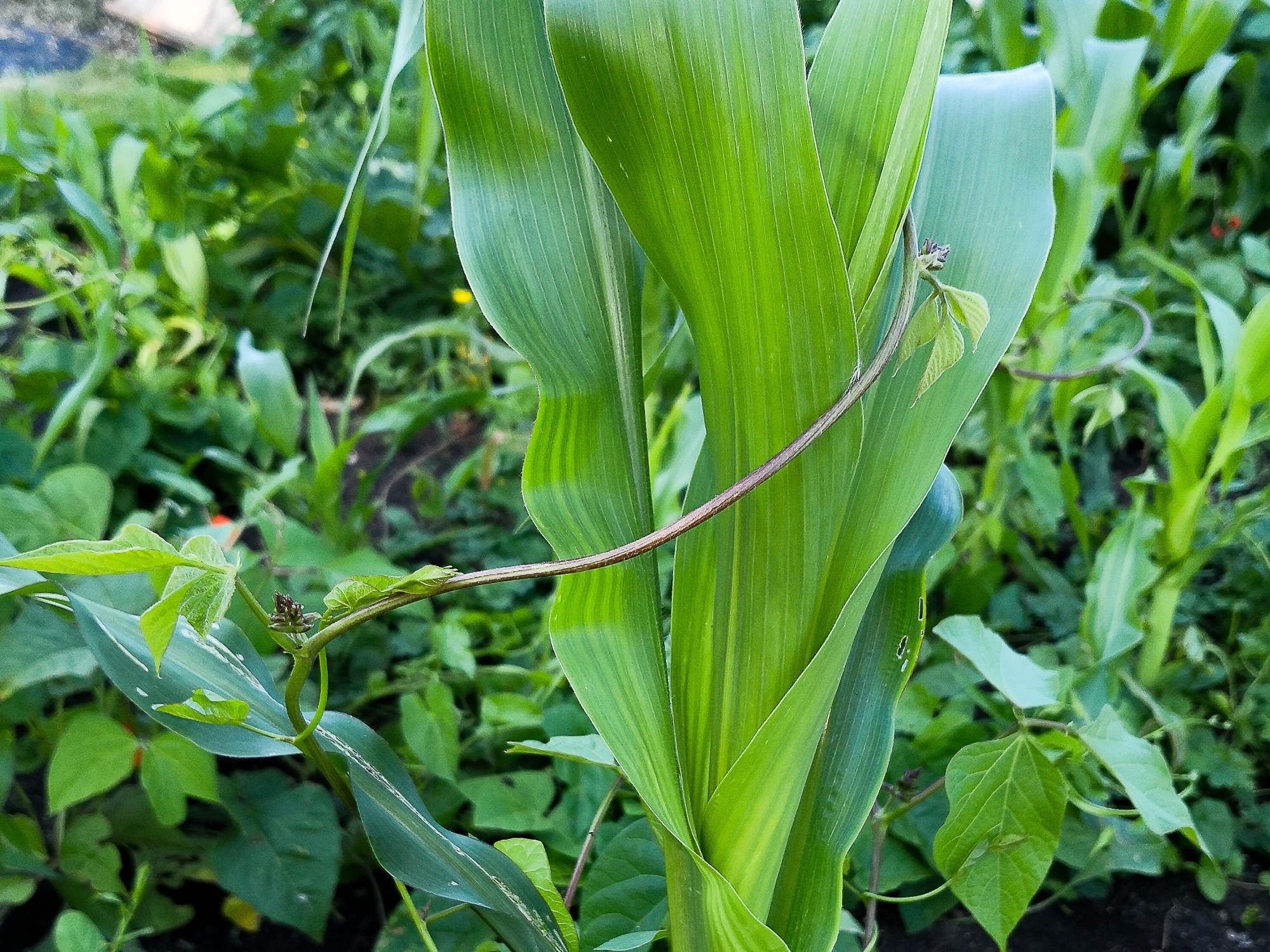
It’s working. I am harvesting food. Potatoes, strawberries, three sorts of kale, the first beetroot (from old seed chucked among the kale plants) courgettes, boysenberries. Tisanes of herb robert, lime flowers, peppermint, liquorice mint, vervain. It really is working! And the three sisters, well they have been slow, but they are beginning to bond. The picture this week shows the first embrace. This process, this method is about trust and patience and accepting that any failure is simply something new to learn. I will go through the principles this week in detail
There is no digging. The land is there in front of you with whatever plants there are. You will need to remove woody plants, but it is probably best to plan your plot where they aren’t. The woody plants have their own value in the system. Brambles produce blackberries, for example. Another thing I left on my plot was a patch of nettles. I cut them down and put them on the compost heap. They are good there. I also made nettle soup. They are beginning to come up again now, and when they get big I will cut them down again.
OK, you’ve selected your area. My daughter Ellen used a bit of her lawn at the front. The picture below shows the results so far – she is harvesting courgettes and kale already.

17th May 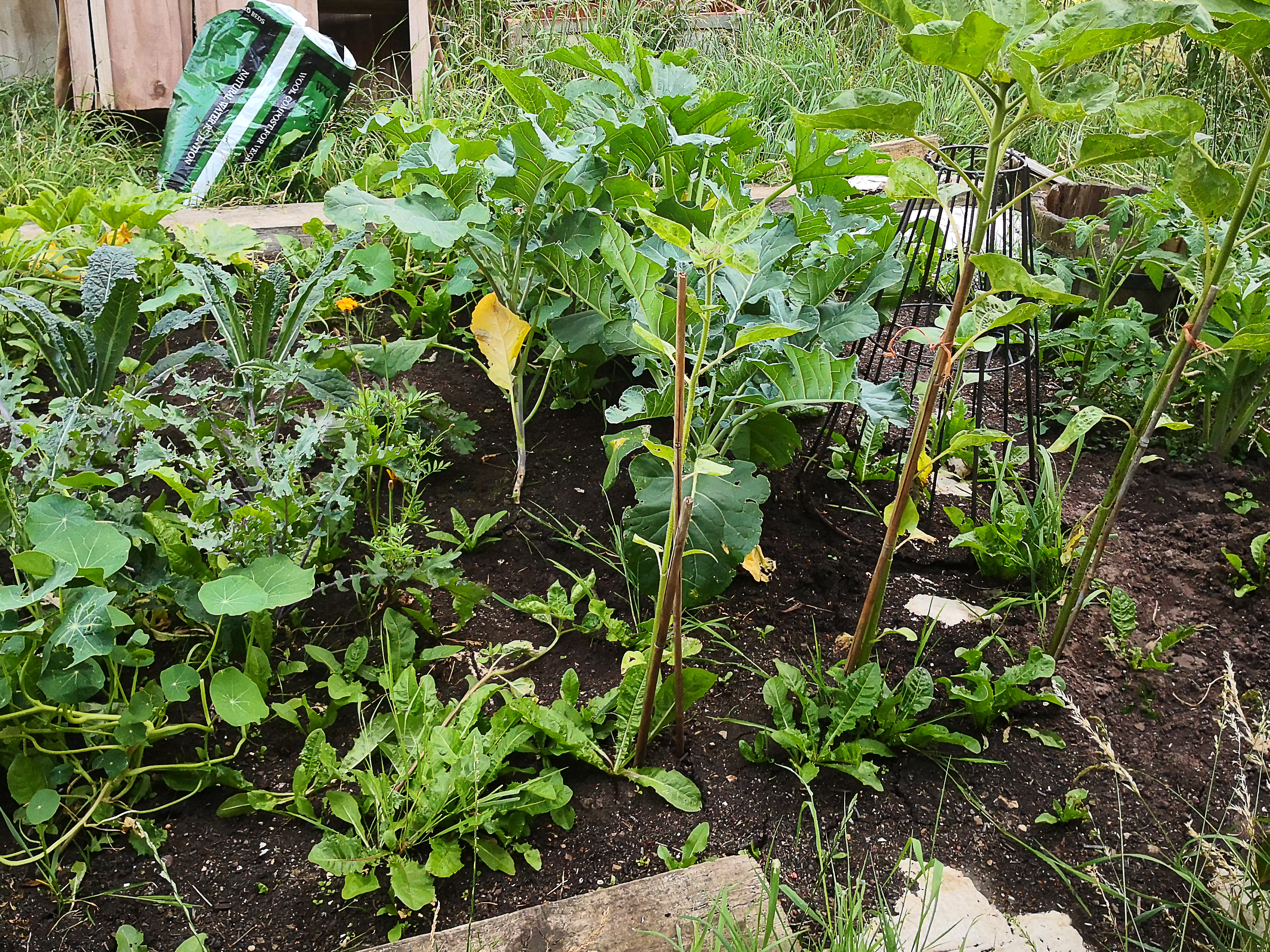
now
Find a source of cardboard. I have a little van and I go to the local bicycle shop. They are happy for me to take as many boxes as I like. These boxes are good because they are big and strong and mostly not covered in too much tape. I have also used fruit boxes from the supermarket. Some of these are made without glue or tape, simply folded like origami. The cardboard is spread over the area, flattening any plants that are there. It might be lumpy but that does not matter. Starting right now you are allowing the soil to be with itself. The only interference will be nestling in your young plants. And as time goes on maybe not even that. I am about to experiment with sowing seeds onto the soaked cardboard and covering them with the mulch. I’ll let you know how that goes.
Water the cardboard and get it thoroughly wet. Then add the mulch. That’s it. Job done.
What is mulch? This is an important question. It is not soil. It is organic matter which has rotted down. Compost. Soil conditioner. Leaf mould. Different expressions for the same thing. Some people use manure – rotted animal droppings with organic matter. I don’t. No particular reason. My experiment is to use only plant material. I use soil conditioner that comes from the green waste that people put in green bins and the council collect and compost. The council shred it all up and make great piles of hot rotting material that cooks the pathogens and any seeds and produces beautiful compost. The specific product I use is put through a sieve or screen with 10 mm holes which takes out the larger bits. It’s called 10 mm screened soil conditioner. It is not soil. It is important to be very specific when sourcing this material. Yesterday when taking to someone on the phone at the recycling centre I asked for soil conditioner and he said Oh yes we do soil, I’ll connect you and I had to explain to the next person what I actually wanted. Organic matter. You can use any organic matter.
I am starting a group in West Berkshire to help more people do this, so if you live near, get in touch. This started as an experiment, not knowing if it would really work, but it’s moved on.
It works!
 a small forest garden
Hi
I wonder why you put cardboard over the soil?
You say:. “Starting right now you are allowing the soil to be with itself. ”
What do you mean here please? Is this why you cover with cardboard?
Is it to suppress the weeds?
The cardboard checks and surpresses the existing plant growth so the things you plant get a head start. It then gets eaten by worms and other soil organisms and adds to the organic matter content of the soil.
Good to see new friends commenting! I’m learning from Mike and friends that soil is really self-nourishing if you leave it undisturbed. I started even later than Mike and Ellen so am a bit behind but – aside from pheasants eating about 30% to-date (cunning plan to deter them) of the corn Mike kindly gave me – it’s going to crop. Tomatoes and courgettes now thriving through the cardboard in the greenhouse as are raspberries outside. And the mulching vastly reduces the need to water, saving resource and time!